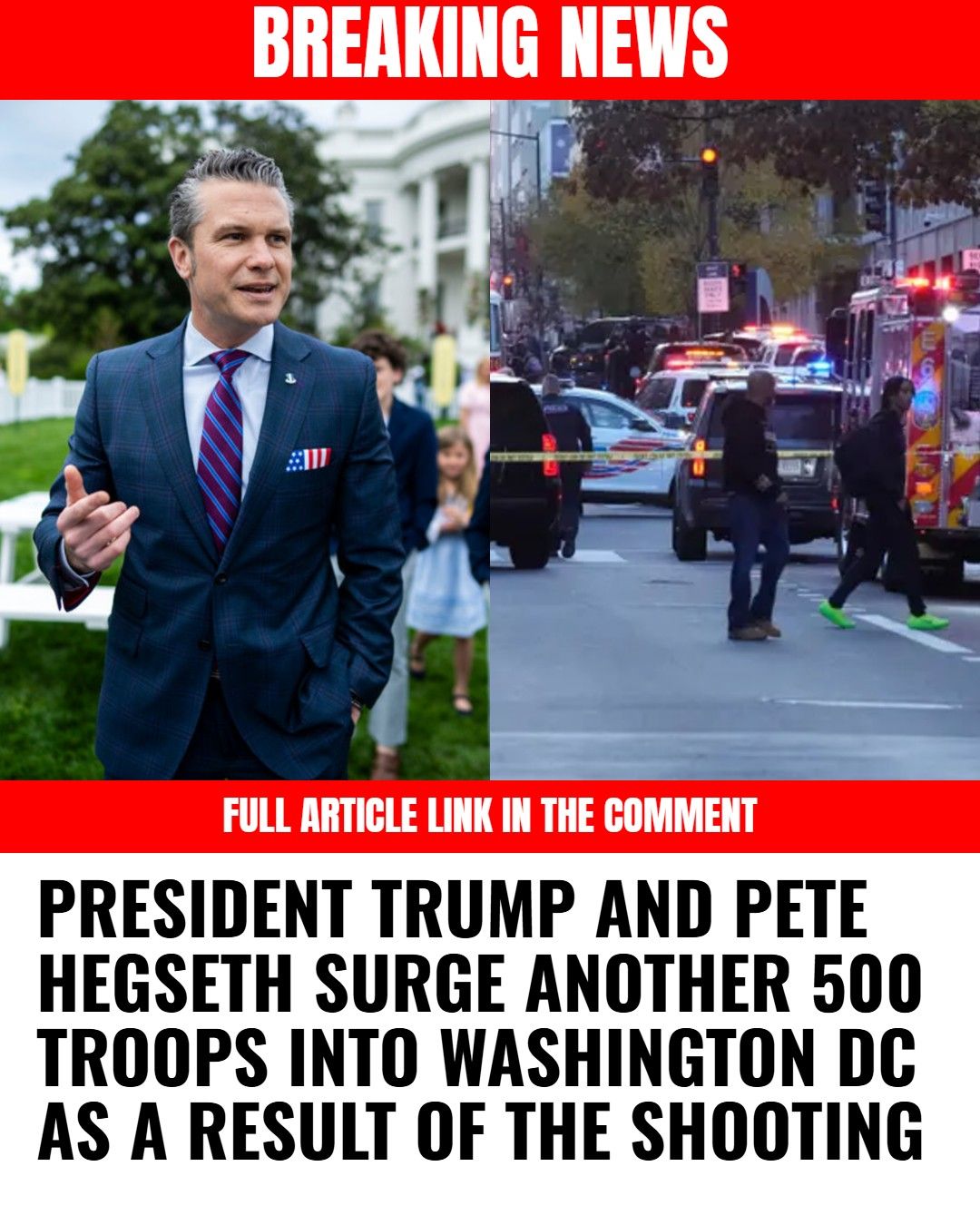
The late afternoon sun slanted across the manicured lawns of the Pentagon on November 26, 2025, casting a golden hue over the riverfront facade as Defense Secretary Pete Hegseth stepped to a podium flanked by American flags and somber aides. It was just hours after the shocking gunfire that claimed two National Guard lives near the White House, and Hegseth’s face, etched with the weight of command, carried the quiet resolve of a man who had served alongside those now lost. “POTUS has asked me to add 500 additional National Guardsmen to Washington, D.C.,” he announced, his voice steady but laced with the gravity of fresh grief. “Someone decided to target National Guardsmen. That will only stiffen our resolve.” The surge, immediate and unyielding, built on the 1,200 troops already rotating through the capital for public safety amid post-election calm, a move President Donald Trump greenlit to fortify the city without delay. For the families shattered by the attack and the soldiers stepping into their shadows, Hegseth’s words offered a thread of reassurance—a promise that their loved ones’ sacrifice would not go unanswered, even as questions swirled in a nation still catching its breath.
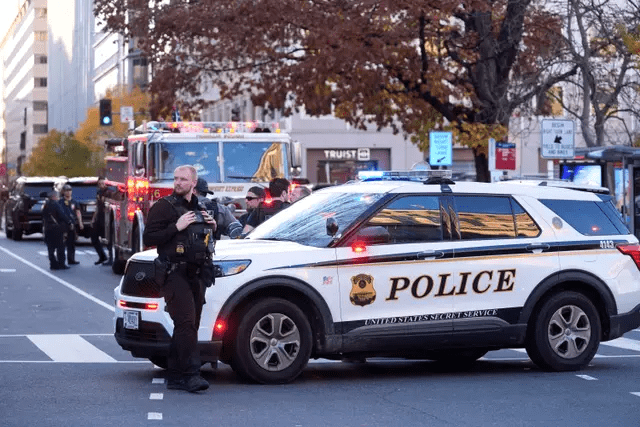
The ambush unfolded with heartbreaking suddenness in Farragut Square, a leafy downtown oasis where lunchtime crowds from nearby offices and Metro stops mingled under bare-branched trees. At approximately 2:20 p.m., Sgt. Michael Harlan, 28, and Staff Sgt. Elena Vasquez, 32, both from the West Virginia National Guard’s 153rd Military Police Battalion, were grabbing a quick bite during a routine patrol shift. Harlan, a Huntington native with a gentle demeanor and a passion for mentoring young recruits, had been joking about holiday plans with Vasquez, a Charleston mother pursuing her criminal justice degree online. “They were the kind who made deployment feel like family,” recalled their platoon leader, Capt. Rebecca Thorne, her eyes misting during a briefing later that day. The gunfire— at least 20 rounds from a semi-automatic handgun—erupted without warning from a lone assailant, a 35-year-old D.C. resident who approached on foot before opening fire. Harlan took rounds to the chest, Vasquez to the upper body; both were medevaced to hospitals but succumbed within the hour, their deaths confirmed by Gov. Patrick Morrisey in a voice-cracking address from Charleston.
The suspect, wounded four times in the legs and torso during a fierce exchange with responding D.C. police, was subdued and rushed to George Washington University Hospital, where he stabilized under heavy guard. Authorities have not named him pending family notification, but preliminary reports describe him as a local with a history of minor disturbances—no known extremist ties, no manifesto, and no cooperation as FBI agents pored over his devices for motives. “This was targeted, no question—these were soldiers in uniform, serving our capital,” D.C. Police Chief Pamela A. Smith said at a 5 p.m. press conference near the taped-off square, her arm around a teary-eyed Guardsman who had rushed to the scene. The response was swift: Secret Service expanded the White House perimeter, grounding flights at Reagan National for 45 minutes and rerouting traffic along Pennsylvania Avenue. By dusk, Hegseth’s announcement from the Pentagon courtyard—flanked by uniformed aides and a phalanx of microphones—signaled the administration’s unyielding stance. “We will never back down. We will secure our capital, we will secure our cities,” he vowed, his call for the additional 500 troops drawing nods from brass who understood the stakes all too well.
For the families, the news arrived like a thunderclap amid the holiday hush. Lisa Harlan, Michael’s wife of three years and mother to their 4-year-old daughter and newborn son, was folding laundry in their Huntington home when the chaplain’s call came. “He kissed me goodbye that morning—said he’d be home for Thanksgiving pie,” she whispered to reporters gathered outside, her hands clasped around a photo of Michael in his dress blues, grinning at last year’s Guard picnic. Vasquez’s brother, Carlos, fielded the knock in Charleston while helping 7-year-old Luca with homework; the boy, sensing the shift, clutched his mother’s trooper badge replica, asking quietly if “Auntie Elena’s okay.” “She was my sister’s everything—tough, funny, always planning the next family trip,” Carlos shared in a statement, his words a lifeline for a community reeling. Vigils bloomed by evening: In Huntington, 1,500 locals lit candles at the armory, singing “God Bless America” under floodlights; in Charleston, Luca placed a drawing of his mom with angel wings at a makeshift memorial, neighbors wrapping the family in hugs and hot meals. GoFundMe pages for both topped $600,000 within hours, fueled by donations from fellow Guardsmen, West Virginia’s congressional delegation, and everyday Americans moved by stories of lives cut short.
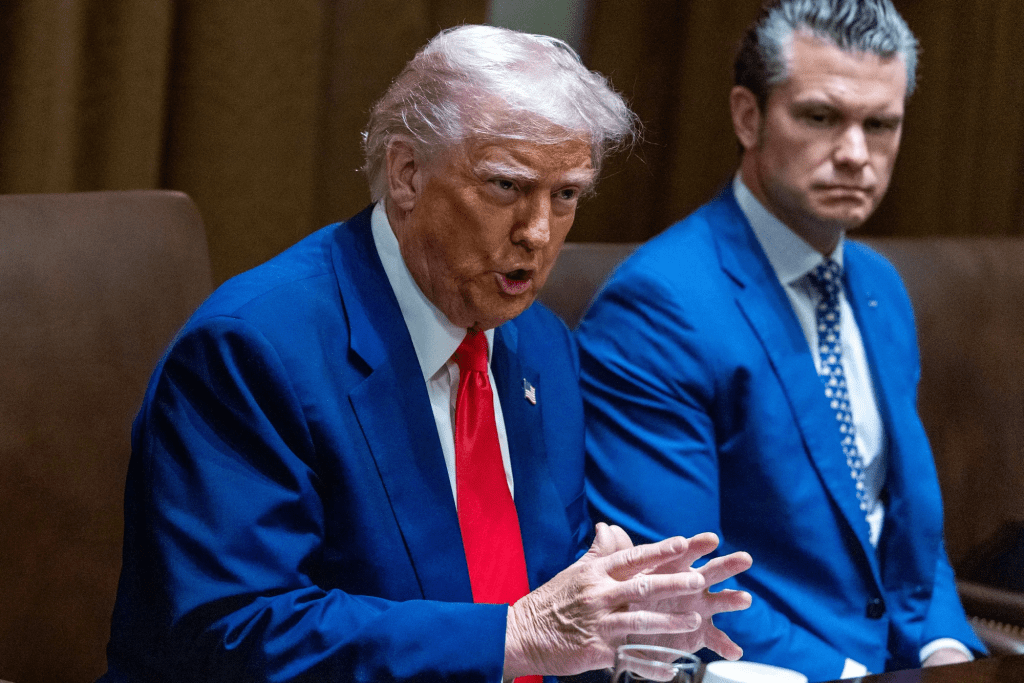
President Trump’s reaction, swift and personal, underscored the administration’s commitment to those who serve. From Mar-a-Lago, where he was reviewing holiday pardons, Trump posted on Truth Social at 3:15 p.m.: “The animal that shot the two National Guardsmen… is also severely wounded, but regardless, will pay a very steep price. God bless our Great National Guard… I am with you!” The words, raw and resolute, drew 2 million interactions in minutes, a digital embrace for families like the Harlans who felt seen in the president’s unfiltered tone. Vice President JD Vance, mid-visit to Fort Campbell in Kentucky, boarded Air Force Two by 4 p.m., vowing to stand with the bereaved. “These patriots were doing their duty with honor—their loss hardens our resolve to protect every American who serves,” Vance said upon landing at Andrews, his Marine background lending authenticity to the pledge. White House Press Secretary Karoline Leavitt, briefing from the James S. Brady room, fought back tears as she read family messages: “The President has spoken with Gov. Morrisey and the Guardsmen’s commanders—our full resources are mobilizing to ensure justice and safety.”
The surge of 500 additional troops—drawn from rotations in Virginia, Maryland, and Pennsylvania—builds on the 1,200 already in D.C. for ceremonial and support roles, a presence ramped up since Trump’s January inauguration to maintain calm amid economic transitions and urban safety initiatives. Hegseth, a former Fox News host and Army veteran whose confirmation in February 2025 emphasized “warrior ethos,” framed the move as proactive protection. “This isn’t about lockdown—it’s about resolve. We honor our fallen by safeguarding those who stand ready,” he added, his briefing video—captured on the Pentagon steps with aides in crisp uniforms—circulating widely as a symbol of steady leadership. The additional forces, arriving by C-17 Globemaster overnight, will bolster patrols around federal sites, Metro stations, and high-traffic areas like Farragut, where chalk outlines still mark the tragedy’s spot. For D.C. residents like 34-year-old teacher Aisha Rahman, who teaches civics to middle schoolers near the square, the news brings mixed comfort. “It’s scary, but necessary—these soldiers were like guardians for us all. Now, we rally for them,” she said, her classroom a sea of drawn American flags as students processed the loss.
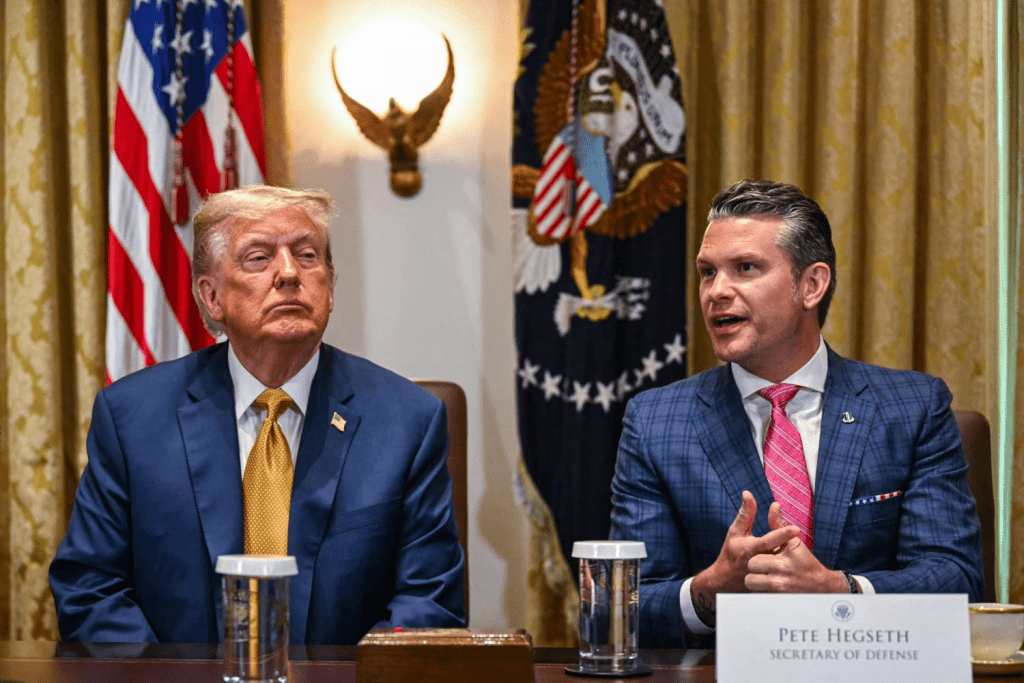
Public sentiment, from Capitol Hill to kitchen tables, weaves grief with gratitude for the administration’s response. In West Virginia, where Harlan and Vasquez hailed from, lawmakers like Sen. Shelley Moore Capito choked up during floor speeches: “They were our neighbors, our everyday heroes—Trump’s action shows he has their backs, just as they had ours.” Social media buzzed with #HonorTheGuardsmen, 3 million posts blending candlelit vigils and calls for justice, many praising Hegseth’s “no-nonsense” surge as a stand against vulnerability. Families received personal calls—Trump reaching Lisa Harlan at 7 p.m., his conversation a father’s comfort to a widow’s raw pain. “He listened, really listened—said Michael was a warrior America needed,” she later shared, her voice softening at the memory. D.C. Mayor Muriel Bowser, touring memorials that evening, echoed the unity: “These troops kept our streets safe—we owe them this protection in return.” Even across aisles, Rep. Jamie Raskin (D-Md.) offered condolences, his note to Morrisey a rare olive branch: “Partisan lines fade in moments like these; let’s honor them together.”
As night deepened over the Potomac, with troop transports rumbling into Joint Base Andrews, the surge stood as a testament to resilience—the fallen’s legacy woven into the fabric of a capital recommitting to safety. For Luca Vasquez, tucking into bed with his grandmother’s stories of Elena’s strength, and Harlan’s children drawing pictures for Daddy’s “big send-off,” the additional boots on the ground offer a quiet shield. Hegseth’s words, delivered under darkening skies, ring true: Resolve stiffened, never backing down. In a season of thanks turned to tribute, the nation’s heart beats a little stronger for those who serve, their light undimmed by loss.