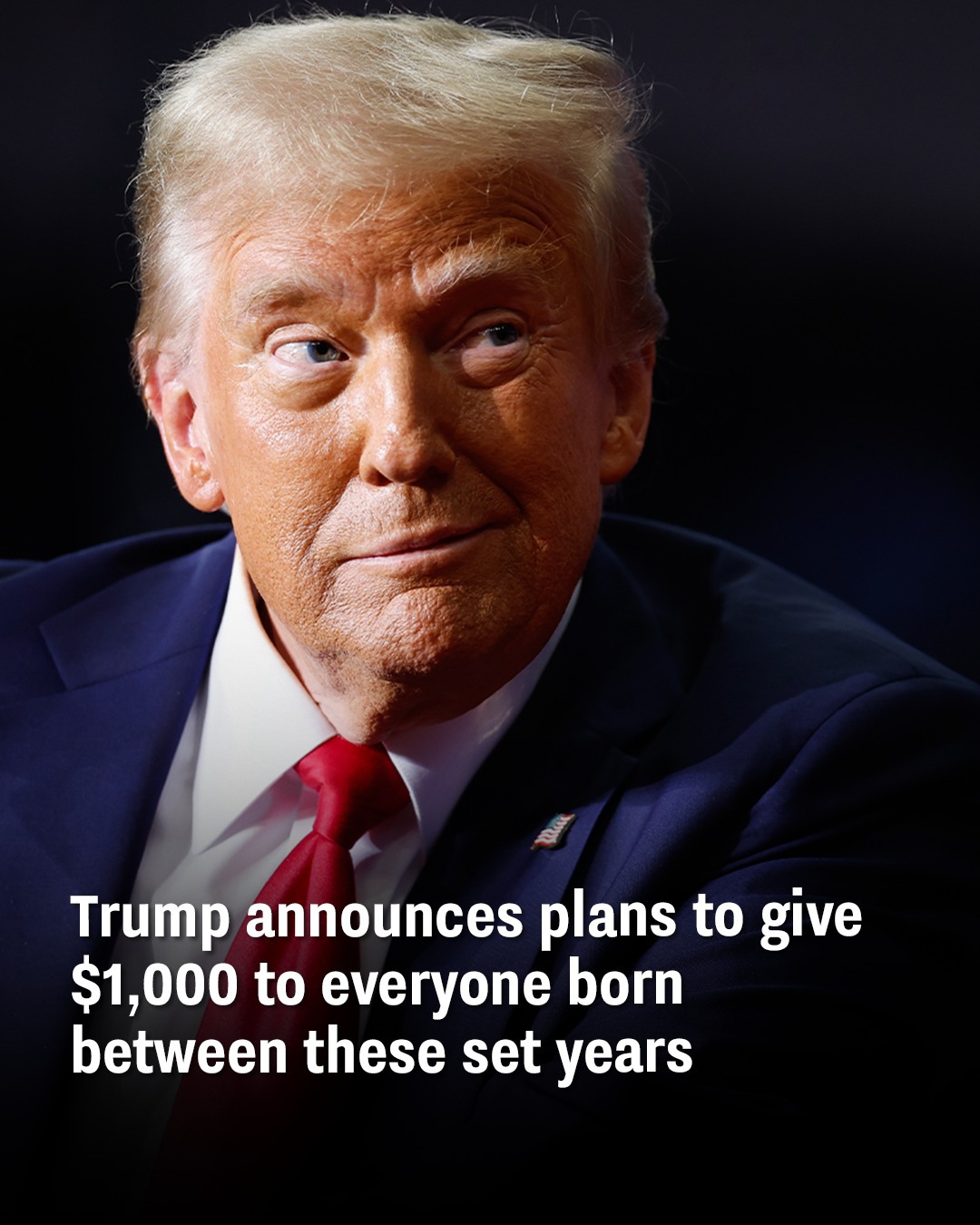
Could your newborn qualify for a $1,000 benefit from the federal government? This is the question that many Americans are contemplating following the announcement of a new proposal by former President Donald Trump, which targets specific birth years. The initiative focuses on establishing government-funded investment accounts for newborns, with the intention of enhancing family savings and promoting early participation in the stock market. However, this opportunity is restricted to children born within a designated timeframe and is contingent upon the approval of a larger, contentious legislative package. The main feature of this proposal is the introduction of ‘Trump accounts,’ a program aimed at providing each eligible infant with a financial advantage through initial investments.
This proposal has ignited discussions across political divides, with some lauding it as a financially beneficial move for families, while others caution that it may jeopardize social support programs. Let us examine who qualifies, what the comprehensive bill entails, and why the term ‘Trump accounts’ is rapidly becoming a contentious political issue.
Who Qualifies and What Are Trump Accounts?
Trump accounts are a new category of tax-deferred investment accounts suggested by Trump as part of a broader economic strategy. Each qualifying child would receive a one-time government deposit of $1,000 into an account that monitors the overall performance of the stock market. Parents or guardians would manage the account and could contribute up to $5,000 annually, providing a potential long-term savings mechanism.
The stipulation? Only infants born between January 1, 2025, and December 31, 2028, would qualify. Proponents, including House Speaker Mike Johnson, describe it as a forward-thinking approach to assist families in accumulating generational wealth. The objective is to foster financial independence by linking young Americans with the nation’s economic growth from the moment of their birth.
The Broader Context
The Trump accounts represent merely a segment of a more extensive legislative initiative that Trump refers to as the “big, beautiful bill.” Should this bill not succeed, the accounts will not materialize. This comprehensive package encompasses a variety of tax modifications and policy reforms that impact working families, small enterprises, and federal assistance programs.
Key Features of the Bill Include:
Abolishing taxes on tips for service personnel
Maintaining tax brackets for overtime earnings
Permitting deductions of up to $10,000 for interest on loans for vehicles manufactured in America
Providing a $200 tax incentive for the acquisition of gun silencers
Additionally, the bill raises the child tax credit by $500, increasing it to $2,500 until 2028. Trump asserts that the bill is a pro-family, pro-worker initiative aimed at rewarding labor, investment, and domestic production. Advocates claim it returns funds to the hands of ordinary Americans and promotes savings through mechanisms like Trump accounts.
An Expensive Tradeoff
Although the Trump accounts may offer advantages to newborns, other elements of the bill could strip essential support from millions of Americans. The proposal entails substantial reductions in Medicaid and the Supplemental Nutrition Assistance Program (SNAP), potentially affecting over 8 million individuals.
Significant Modifications Include:
More stringent eligibility assessments for Medicaid and SNAP
Exclusion of benefits for undocumented immigrants
A federal prohibition on funding for gender-transition procedures, even for adults
Early estimates suggest that these alterations could save the government around $1 trillion. Nevertheless, critics contend that this would impose a severe burden on vulnerable groups. Low-income families, the elderly, and individuals with chronic health issues would bear the brunt of these changes. While some Americans may experience benefits through Trump accounts and tax incentives, others could encounter a loss of access to essential food and healthcare services.
Political Strategy or Pro-Family Vision?
Trump characterizes this initiative as a pro-family effort aimed at fostering savings, encouraging financial independence, and redefining the support provided to children from the very beginning. He asserts that every child ought to have a stake in the American economy. In his perspective, Trump accounts represent a significant step toward realizing that vision.
However, critics perceive the plan as a political risk. By linking a widely accepted concept like baby investment accounts to contentious cuts and tax alterations, the proposal compels lawmakers to accept a bundled package. It is not solely about providing; it also involves what the government would withdraw in return.
Economists further highlight that investments in the stock market can entail risks. While these accounts have the potential for substantial growth over time, they may also diminish if market conditions are unfavorable. For families that cannot make additional contributions, the advantages could be limited.
What Happens Next?
Currently, the entire plan exists only as a proposal. For it to progress, the comprehensive bill must be approved by both the House and the Senate. This process will likely entail revisions, discussions, and intense negotiations. Republicans may endorse the measure, but Democrats are anticipated to contest the proposed reductions in healthcare and food assistance.
Even if the bill successfully passes through the House, it may face delays or modifications in the Senate. With midterm elections on the horizon, lawmakers might be reluctant to support legislation that combines financial incentives with cuts to social programs.
Until the bill is enacted, families cannot rely on receiving a Trump account for their child. Nevertheless, the dialogue has commenced, and it is evident that this proposal will be integral to a broader discussion regarding the most effective ways to support American families.
A Proposal Full of Promise and Pitfalls
The proposal has garnered national attention due to its potential to provide newborns with a financial advantage. It represents an innovative approach to long-term savings and economic engagement, presented with the allure of a tangible $1,000 benefit.