Interest in the 2028 U.S. presidential election is already beginning to build, even though the candidates have yet to be officially determined. Recently, an online video drew attention after a content creator used Grok AI, an artificial intelligence tool developed by xAI, to simulate a possible election outcome and produce a hypothetical Electoral College map. The simulation explored how the race might look if current political trends and early polling data continued, offering viewers a preview of potential scenarios rather than a firm prediction of future results.
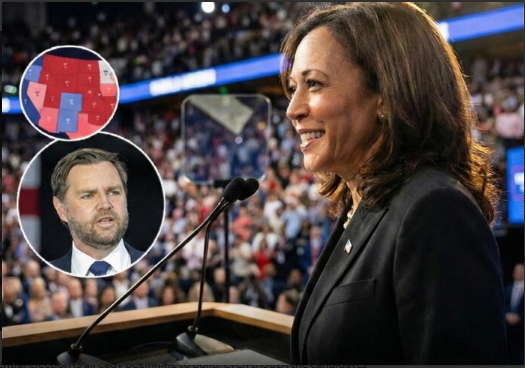
In the simulated matchup, the AI examined a scenario involving Vice President Kamala Harris as a potential Democratic nominee and Vice President JD Vance as a possible Republican candidate. Early polling discussed in the video suggests Harris currently leads among several potential Democratic contenders, while Vance appears to hold strong early support within Republican circles. The simulation also referenced public polling trends and market speculation, but the host emphasized that these projections are speculative and could change significantly as the political landscape evolves over the coming years.
The AI model divided states into categories based on past voting trends and hypothetical margins of victory. States that have historically leaned strongly toward one party were placed into “solid” categories, while more competitive states were marked as likely or leaning toward one side. According to the simulation, several traditionally competitive states in the Midwest and Sun Belt regions could once again play decisive roles in determining the final Electoral College outcome. However, analysts note that political dynamics often shift between election cycles, making long-term forecasts uncertain.
Online reactions to the simulation varied widely, with many viewers debating whether such a matchup is realistic or whether entirely different candidates may ultimately emerge. Experts frequently caution that election outcomes depend on many unpredictable factors, including economic conditions, voter priorities, and future campaign developments. As a result, simulations like this are best viewed as conversation starters rather than reliable predictions. With several years remaining before the next presidential election, political observers agree that the landscape could change considerably, making it far too early to draw firm conclusions about who will appear on the ballot or how voters will ultimately decide.