Kaitlan Collins Responds After Trump Criticizes CNN Reporting, Reigniting Tensions Between the White House and the Press
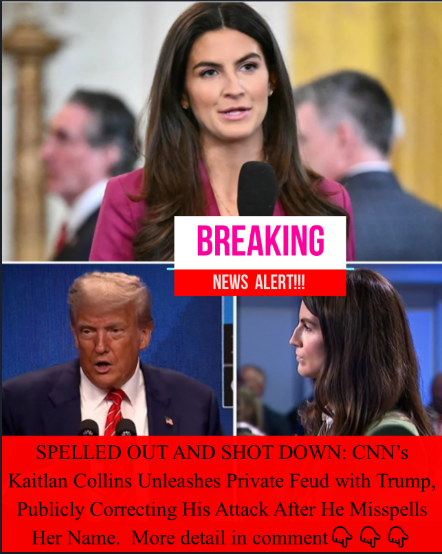
The long-running tension between former President Donald Trump and members of the White House press corps resurfaced again this week when Trump publicly derided CNN Chief White House Correspondent Kaitlan Collins, prompting a pointed response from the journalist. The exchange, rooted in questions Collins posed about recent administration actions and the cost of a newly constructed White House ballroom, quickly expanded into a broader discussion of press freedom, presidential accountability, and Trump’s style of engaging with reporters.
Trump’s message criticized Collins personally and dismissed her reporting, specifically objecting to her reference to the ballroom’s increasing price tag and its months of public scrutiny. The former president defended the structure as a privately funded project undergoing enhancements and insisted that it was progressing ahead of schedule. His comments also repeated his longstanding criticisms of CNN, framing the network as consistently hostile to him.
Collins, for her part, responded with a brief but pointed correction, noting that her original line of inquiry had focused on a completely separate issue: the administration’s recent authorization of airstrikes on maritime targets near Venezuela. Her clarification underscored how the original question had been overshadowed by the former president’s unrelated rebuttal.
The moment marked another chapter in a relationship that has often been adversarial, particularly between Trump and female journalists who have challenged him on policy details or accountability questions.
The Question That Sparked the Exchange
During a recent episode of The Source with Kaitlan Collins, the CNN correspondent addressed her exchange with the administration. She reiterated that her on-air question had asked for justification behind a series of U.S. military actions near Venezuela—specifically the bombing of boats the administration has described as drug smuggling vessels.
Those strikes, carried out in the Caribbean region, have resulted in dozens of fatalities and significant international criticism. Venezuelan officials have claimed the operation is politically motivated or tied to control of the country’s vast oil reserves, accusations the U.S. State Department has repeatedly denied. According to U.S. officials, the strikes are part of a broader campaign intended to disrupt the flow of cocaine and fentanyl into American communities.
Collins’ question had aimed to clarify the administration’s justification. Trump’s response, however, diverted the discussion to the ballroom renovation, prompting wider commentary on how public attention can be redirected during contentious briefings.
A Social Media Post and a Swift Rebuttal
In his message, Trump defended the new ballroom’s cost, insisting that the expanded structure—described as larger, more ornate, and built with high-end finishes—was being funded entirely by private donors rather than taxpayer money. He cited the project’s pace and budgeting as evidence of his leadership style, a refrain he often uses when discussing construction projects or redevelopment efforts launched during his political tenure.
Collins, addressing the criticisms leveled against her, responded publicly but succinctly. Her message reminded audiences that the original subject had been foreign policy, not interior design or renovations to White House property. Her tone was measured, consistent with her broader reputation as a journalist known for direct but professional questioning.
Media observers noted that this understated response stood in contrast to the more aggressive, personalized criticism Trump directed toward her.
U.S.–Venezuela Policy Under the Microscope
The administration’s airstrike policy regarding Venezuela remains a flashpoint in both domestic and international debate. While U.S. officials frame the operations as essential counter-narcotics measures, Venezuelan leadership has decried them as violations of sovereignty and politically motivated acts.
In recent years, Venezuela has experienced deep economic and political crises, with humanitarian challenges and strained international relations shaping its interactions with the U.S. The country’s leadership has accused American officials of using narcotics enforcement as a justification for interference, a claim the State Department strongly rejects.
Collins’ question highlighted the complexities of this policy area and the need for public clarification regarding both strategy and humanitarian implications.
A Pattern of Tense Interactions With Journalists
The friction between Trump and Collins is not new. Throughout his political career, Trump has shown a tendency to publicly criticize journalists whose questions he views as unfavorable, especially during moments involving scrutiny of national policy. Female correspondents have frequently been the target of sharp comments that critics argue are designed to diminish, deflect, or redirect.
Collins joins a list of reporters who have found themselves singled out by Trump or members of his communications team. In November, another exchange between Trump and a White House reporter made headlines after he directed a dismissive remark at a journalist during a policy discussion. A spokesperson later defended his tone as “direct commentary,” a defense that itself generated debate about the boundaries of presidential conduct.
Analysts note that these moments highlight a larger challenge for journalists assigned to cover presidential administrations: navigating environments in which policy discussions and personal attacks may become intertwined. Collins’ composure and succinct response earned praise from other reporters who saw the moment as emblematic of the need for press resilience.
The Kennedy Center Appearance and Additional Questions
The same day Collins addressed the Venezuela strikes on her program, she also appeared on the red carpet at the Kennedy Center, where she questioned Trump about accepting a newly established international award connected to global athletic initiatives. Her inquiry centered on the apparent tension between accepting a symbolic peace-related honor while simultaneously authorizing military operations abroad.
Trump chose not to engage with that line of questioning, but the moment further illustrated the complicated balance between ceremonial appearances and substantive policy discussions during a high-profile presidency.
A Broader Pattern of Media Strategy and Political Theater
Political communication experts say the episode illustrates several recurring features of modern political media:
1. Personalization of criticism.
Rather than addressing policy questions directly, some political figures choose to focus on a journalist’s tone or credibility, reframing the narrative around media behavior instead of governmental accountability.
2. Message redirection.
By shifting the focus to the White House renovation, Trump redirected public attention toward a topic that offered him a narrative advantage: showcasing private fundraising and construction efficiency.
3. Counter-messaging by journalists.
Collins’ brief rebuttal reframed the issue by reminding audiences of the original, policy-grounded question. This type of correction is becoming more common among high-visibility reporters.
4. Heightened public polarization.
Interactions involving Trump often generate large waves of online reaction, even when the topic at hand begins as a straightforward policy inquiry.
The Enduring Strain Between Presidents and the Press
The relationship between the presidency and the press has always been complex, oscillating between cooperation and conflict. But Trump’s communication style—characterized by rapid counterattacks, strong personal framing, and a willingness to escalate minor disputes—creates a uniquely charged environment for journalists.
Collins, known for her direct questioning and calm demeanor, has become one of the prominent faces of day-to-day White House accountability reporting. Her exchanges with Trump, while sometimes tense, reflect a core function of the press: raising difficult questions during moments of heightened national interest.
As the administration continues to navigate foreign policy challenges and domestic controversies, observers expect similar conflicts to recur. Whether the dynamic remains a point of friction or becomes a predictable feature of this political chapter may depend on how both sides adjust their communication strategies.
A Moment That Reflects a Larger Media Landscape
In the end, the latest exchange between Trump and Collins is less about posture or personality and more about the shifting terrain of political communication. The modern media environment amplifies even small interactions into national conversations. A question about foreign policy can quickly become a debate about tone; a presidential response can overshadow the very subject that prompted it.
For journalists, the challenge remains the same: keep the focus on policy substance. For political leaders, the challenge is different: decide which criticisms to engage with—and which to let pass.
In this incident, Collins’ brief, factual correction may serve as a template for how reporters can navigate confrontations without being drawn into personality-driven disputes.
And for Trump, it is another example of how his communication style—sharp, immediate, and unapologetically personal—continues to define his political presence, energizing supporters and critics alike.