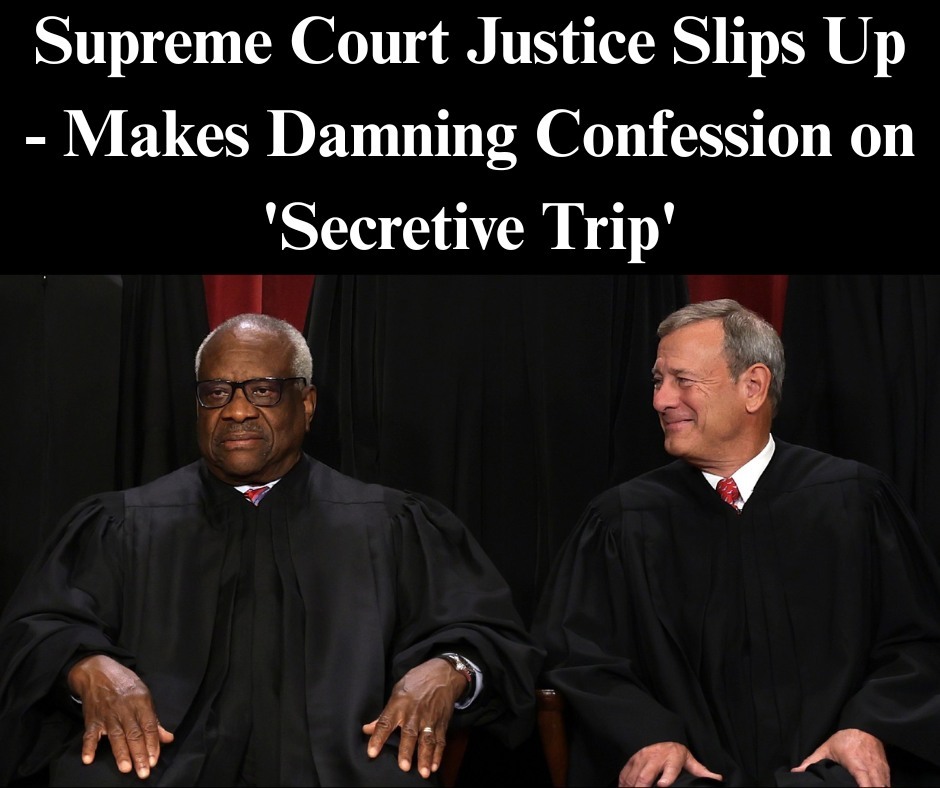
On Wednesday evening, Chief Justice John Roberts made a rare public appearance at an awards dinner in Buffalo, New York, where he discussed various issues concerning the Supreme Court. Roberts participated in a Q&A session with U.S. District Judge Lawrence J. Vilardo, who inquired about his experiences as a notable public figure.
The event was aired on C-SPAN3. ‘Let us discuss your role as a public figure,’ Vilardo stated. ‘You are undoubtedly well-known, and people recognize you. You must maintain a public persona at all times, as you are doing now.
How do you manage to keep your private life separate from this significant role as the Chief Justice of the United States?’ In response, Roberts recounted an incident during a vacation abroad with his wife, where he was mistaken for former House Speaker John Boehner by another American citizen.
Last year, my wife and I vacationed in Portugal when an American approached us. He looked at me and remarked, ‘I recognize you. You are John Boehner,’ which elicited laughter from the audience, Roberts recounted. ‘I had to spend the entire evening pretending to be John Boehner. Therefore, when you mention being readily recognizable, I must admit that it is not entirely accurate,’ Roberts added.
The situation is deteriorating, primarily due to the increasing visibility of the court’s activities. This poses a challenge, he remarked. “I would estimate that 99% of my encounters with individuals involve them greeting me, which is acceptable. This is a positive aspect. However, our level of recognition is not as high as one might assume.”
Earlier this week, a legal organization supportive of Trump, established by Stephen Miller, the deputy chief of staff at the White House, initiated a lawsuit against Roberts. This action represents a challenging endeavor as Trump supporters respond to judicial decisions that have impeded significant executive measures.
The lawsuit, filed by the America First Legal Foundation, specifically targets Roberts in his capacity as the head of the U.S. Judicial Conference, along with Robert J. Conrad, the director of the Administrative Office of the U.S. Courts, as reported by Fox News.
The complaint asserts that both the Judicial Conference and the Administrative Office have undertaken regulatory actions that surpass their constitutional authority, claiming that such actions are beyond the judiciary’s fundamental duties of adjudicating cases and offering administrative support.
Furthermore, the lawsuit argues that the records held by the U.S. Judicial Conference, under Roberts’ direction, ought to be accessible to Freedom of Information Act (FOIA) requests due to the alleged regulatory overreach.